Japanese Slang

Why “Mendokusai” Doesn’t Simply Mean “Troublesome”

Learn the real meaning of “mendokusai” in Japanese! Discover why it doesn’t simply mean “troublesome,” how anime characters use it, and the core feeling behind this extremely common expression.
Word Meanings

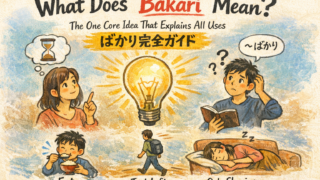
What Does “Bakari (ばかり)” Mean? Start Here.

Struggling with “bakari” in Japanese? Learn the one core meaning that explains all uses, plus examples, nuances, and similar expressions like “shika” and “darake.”
How to Study Japanese

How to Improve Your Japanese: The Missing Link Between Language and Culture

Learn why Japanese feels indirect and confusing. Discover how culture shapes the language, why “no” isn’t always said directly, and how to improve your Japanese naturally.
Nuance of Word

How to Say “Last Month” in Japanese: Nuance, Usage, and What Native Speakers Actually Say

Confused about “senshuu,” “zengetsu,” or “sakuzuki”? Learn how to say “last month” in Japanese naturally, with real usage and cultural context.
Nuance of Word

Why Japanese Sentences Don’t Need Subjects (And Why That Makes Them Hard to Understand)

Learn why Japanese sentences often omit subjects like “I” and “you.” Understand how context works in Japanese and improve your natural speaking skills.
Nuance of Word

Stop Using the Wrong “I” in Japanese: A Real-Life Guide to Sound Natural

Confused about “watashi,” “boku,” and “ore”? Learn how to choose the right “I” in Japanese and avoid sounding unnatural in real conversations.
Nuance of Word

Why You Don’t Need to Say “Watashi” Every Time in Japanese

Learn why “watashi (私)” is often omitted in Japanese conversation and when you should use it. Improve your natural Japanese speaking skills today.
Nuance of Word

Why Using “Anata” Sounds Strange in Japanese (And What to Say Instead)

Learn why “anata (あなた)” sounds unnatural in Japanese conversation and what native speakers say instead. Master natural ways to address people in Japanese.
Word Meanings

What does “Urusai” mean in Japanese? (Common Anime Phrase Explained)

What does “urusai” mean in Japanese? It means “noisy” or “shut up,” but can sound rude. Learn how it’s used in anime and real conversations.
Word Meanings

What does “Kimochi Warui” mean in Japanese? (Common Anime Phrase Explained)

What does “kimochi warui” mean in Japanese? It means “gross” or “creepy,” but can also be used like slang similar to “yabai.” Learn its meaning and usage.